


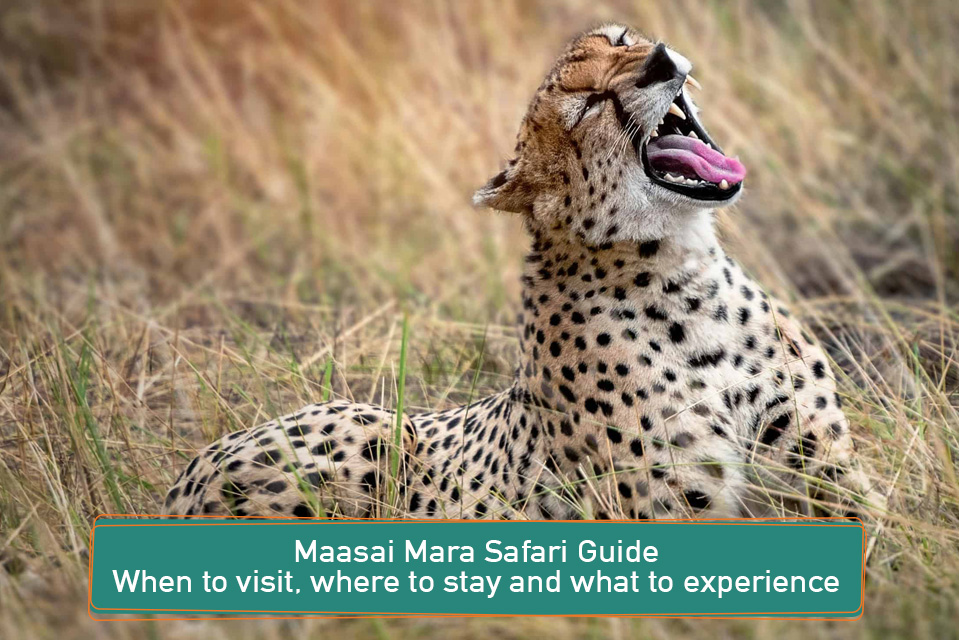
A Maasai Mara Safari is one of the most rewarding wildlife experiences in Kenya. Set in south-west Kenya, along the border with Tanzania, the Maasai Mara is known for open savannah plains, exceptional big cat sightings, large elephant herds, Maasai culture and the seasonal movement of wildebeest and zebra during the Great Migration.
For many travellers, a Maasai Mara safari in Kenya is the centrepiece of their trip. It can work well as a short fly-in safari from Nairobi, a road safari for travellers comparing value-led options, or part of a longer Kenya safari itinerary that includes Amboseli, Lake Nakuru, Samburu, Laikipia or the Kenyan coast.
This guide explains how to plan a Maasai Mara Safari, including when to visit, what animals you may see, how the Great Migration works, the difference between the Maasai Mara National Reserve and private conservancies, how local Maasai communities are involved in conservation, and how to choose the right camps, lodges and safari packages.
Why choose a Maasai Mara Safari?
The Maasai Mara is one of Africa’s most famous safari regions for good reason. It offers reliable wildlife viewing, wide open landscapes and a strong chance of seeing predators, especially lions, cheetahs and leopards. The terrain is also relatively open, which makes it easier to spot animals than in thicker bush destinations.
The Mara forms the northern part of the wider Serengeti-Mara ecosystem. Wildlife moves between Kenya and Tanzania, especially during the Great Migration, when large herds of wildebeest and zebra travel north into the Maasai Mara in search of fresh grazing.
A Maasai Mara Safari is especially good for:
- First-time safari travellers who want strong wildlife viewing.
- Photographers looking for open plains, dramatic light and predator sightings.
- Families who want a well-established safari destination with a good choice of lodges.
- Couples and honeymooners looking for luxury tented camps and fly-in safaris.
- Travellers hoping to see the Great Migration between July and October.
The Maasai Mara is not the quietest safari destination in Africa during peak migration season, and the most popular areas can become busy. However, with careful planning, good guiding and the right camp location, it remains one of the best places in Africa for a classic safari.
A brief history of the Maasai Mara
The Maasai Mara takes its name from the Maasai people and the Mara River. The word “Mara” is often understood to mean “spotted” in the Maa language, describing the way the landscape looks from a distance, with scattered trees and shrubs breaking up the grasslands.
The area has long been home to Maasai pastoralist communities, whose lives have traditionally centred around cattle, seasonal grazing and movement across open land. Wildlife and livestock have shared this landscape for generations, although modern pressures such as fencing, settlement, tourism growth and changing land use have made conservation more complicated.
The Maasai Mara National Reserve was formally established in the 20th century and has become one of Kenya’s most important protected wildlife areas. Over time, the wider Greater Mara ecosystem has developed beyond the main reserve, with surrounding private conservancies now playing a major role in protecting wildlife habitat and supporting local communities.
This history matters because the Maasai Mara is not simply a fenced-off wilderness. It is a living landscape where wildlife conservation, tourism and Maasai land ownership are closely connected.
Working with local Maasai communities
A good Maasai Mara Safari should also help travellers understand the role of the local Maasai community. The Mara’s wildlife depends not only on the National Reserve, but also on the surrounding land where animals move, graze, hunt and disperse.
This is where private conservancies have become important. Many conservancies around the Maasai Mara operate through partnerships with Maasai landowners. In broad terms, local landowners lease land for conservation and tourism use. Safari camps and tourism operators pay fees that help support land lease payments, ranger teams, local employment, conservation work and community projects.
This model can benefit both people and wildlife. Landowners receive income from keeping land open for wildlife rather than converting it to other uses, while safari travellers enjoy quieter, lower-density wildlife areas with fewer vehicles and more flexible activities.
For visitors, this means the camp you choose can make a difference. Some camps have strong community links, employ local Maasai guides and staff, support schools or health projects, and pay regular lease fees to landowners. Others may be less transparent.
When comparing Maasai Mara camps, it is worth asking:
- Does the camp work directly with local Maasai landowners?
- Are local guides and staff employed?
- Are conservancy or community fees included in the safari price?
- Does the camp support any local education, health or conservation projects?
- Are cultural visits respectful and fairly managed?
A cultural visit can be a valuable part of a Maasai Mara safari in Kenya, but it should feel genuine and respectful. The best experiences are locally led and give travellers a more thoughtful understanding of Maasai life, rather than feeling like a staged photo stop.
Maasai Mara national reserve vs private conservancies
Travellers planning a Maasai Mara Safari usually choose between staying in or near the Maasai Mara National Reserve, staying in one of the surrounding private conservancies, or combining both.
Each option offers a different safari experience.
| Feature | Maasai Mara National Reserve | Private Conservancies |
|---|---|---|
| Best for | Classic Mara safari and migration viewing | Quieter safaris and exclusive camps |
| Wildlife density | Very high, especially during migration season | Excellent, although wildlife may be more spread out |
| Vehicle numbers | Can be busy at popular sightings | Usually limited for a more private experience |
| Game drives | Daytime game drives only | Day and night drives often possible |
| Walking safaris | Usually not permitted | Often available with trained guides |
| Off-road driving | Restricted | Often allowed under conservancy rules |
| Accommodation | Wide range of lodges and camps | Smaller, more exclusive tented camps |
| Community benefit | Through reserve fees, jobs and tourism | Often direct land lease and community models |
The Maasai Mara National Reserve is still the heart of the classic safari experience, especially if you are focused on the Great Migration and the Mara River crossings. It has high wildlife density and access to some of the most famous migration areas.
Private conservancies offer a different rhythm. Camps are usually smaller, vehicle numbers are controlled, and activities may include night drives, guided walks, bush breakfasts and off-road game viewing. They are often a better fit for travellers who want a quieter and more personal safari.
For many people, the ideal itinerary combines both: time in the main reserve for migration access and time in a conservancy for a more exclusive safari experience.
Wildlife you can see on a Maasai Mara safari
The Maasai Mara is known for excellent wildlife viewing throughout the year. While the Great Migration brings huge seasonal herds, the Mara also has strong resident wildlife, which means a safari can be rewarding even outside migration season.
- Big cats
- Elephants, buffalo and giraffes
- Plains game
- Hyenas and smaller predators
- Birds
- June to October: dry season and migration months
- November to May: green season
- January to March: a useful shoulder period
- Budget camps
- Mid-range lodges and tented camps
- Luxury camps
- Mobile and seasonal camps
- Unfenced camps
- Road safari from Nairobi
- Fly-in safari
- Who to fly with:
- Budget Maasai Mara Safari
- Mid-range Maasai Mara Safari
- Luxury Maasai Mara Safari
- Game drives
- Hot-air balloon safaris
- Walking safaris
- Night drives
- Cultural visits
- What is the best month for a Maasai Mara Safari?
- Can you see the Great Migration in the Maasai Mara?
- Are Mara River crossings guaranteed?
- Is the Maasai Mara good outside the Great Migration?
- Is it better to stay in the Maasai Mara National Reserve or a conservancy?
- How much does a Maasai Mara Safari cost?
- How do you get to the Maasai Mara?
- Is a Maasai Mara Safari suitable for families?
- What should I pack for a Maasai Mara Safari?
- Do I need an eTA for Kenya?
Big cats
Big cats are one of the main reasons travellers choose a Maasai Mara Safari.
Lions are frequently seen across the reserve and conservancies. They may be resting in the shade during the day, moving across the plains in the early morning, feeding on a kill or watching herds of antelope, zebra and wildebeest.
Cheetahs are another major highlight. The open grasslands suit their hunting style, and the Mara is one of the better places in Africa to see them in daylight. A cheetah sighting can be calm and quiet, with the animal scanning the plains from a mound, or fast and dramatic if it begins to hunt.
Leopards are more elusive. They prefer thicker cover, riverine woodland and rocky areas. Seeing one often depends on good guiding and patience. A leopard draped over a branch or moving silently through long grass is one of the Mara’s most memorable sightings.
Elephants, buffalo and giraffes
Elephants are commonly seen in family groups, often moving slowly across the plains or feeding near woodland and river areas. Buffalo are also widespread and may be seen in large herds or as older lone males.
Giraffes add a different shape to the landscape, browsing from acacia trees and moving with a slow, almost careful rhythm. They are often overlooked because they are relatively easy to see, but they are one of the most elegant animals in the Mara.
Plains game
The Mara supports large numbers of herbivores, including zebra, wildebeest, impala, topi, eland, Thomson’s gazelle, Grant’s gazelle, hartebeest and warthog. These animals form the foundation of the ecosystem and support the region’s high predator numbers.
During migration season, the number of wildebeest and zebra increases dramatically as herds move into the Mara from the Serengeti.
Hyenas and smaller predators
Spotted hyenas are common and play an important role as both hunters and scavengers. They are intelligent, social animals and are often seen around kills, dens and open grassland.
Other smaller predators and nocturnal animals may include jackals, servals, bat-eared foxes, genets, civets, mongooses and springhares. Some are easier to see on night drives in private conservancies.
Birds
The Maasai Mara is also excellent for birdwatching. Raptors, vultures, secretary birds, kori bustards, lilac-breasted rollers, bee-eaters, storks, ground hornbills and many smaller grassland birds can be seen. The green season is especially good for birdlife, with migrant species adding variety.
The Great Migration in the Maasai Mara
The Great Migration is the most famous event associated with a Maasai Mara Safari, but it is often misunderstood. It is not a single event, and it does not happen on a fixed date. It is a continuous movement of wildebeest, zebra and gazelles through the Serengeti-Mara ecosystem, driven mainly by rainfall, fresh grazing and water.
Each year, vast herds move in a rough circular pattern through Tanzania’s Serengeti and Kenya’s Maasai Mara. The exact timing varies from year to year, but the herds usually reach the Maasai Mara between July and October.
For many travellers, this is the ultimate reason to visit the Mara. But it is important to plan with realistic expectations. The migration is wild, unpredictable and shaped by weather. No safari operator can guarantee a river crossing on a specific day.
When does the Great Migration reach the Maasai Mara?
In most years, the first major herds begin arriving in the Greater Mara around July. August and September are often considered the most reliable months for seeing large numbers of wildebeest and zebra in the Maasai Mara. By October, some herds may still be in Kenya, while others begin moving south again towards the Serengeti.
A broad guide looks like this:
| Month | What usually happens |
|---|---|
| June | Herds are often moving through the western or northern Serengeti. Early movement towards the Mara may begin depending on rainfall. |
| July | Wildebeest and zebra begin reaching the Maasai Mara. River crossing activity may start. |
| August | Often one of the strongest months for large herds and possible Mara River crossings. |
| September | Excellent migration viewing in many years, with herds spread across the Mara. Crossings may still happen. |
| October | Herds may remain in the Mara or begin moving south. Return crossings are possible. |
| November | Some late movement may occur, but the main migration focus often shifts back towards Tanzania. |
This is only a guide. A wetter or drier year can shift the herds by several weeks. That is why travellers should avoid booking a Maasai Mara Great Migration safari on the assumption that one specific date will deliver one specific event.
What are the Mara River crossings?
The Mara River crossings are the most dramatic part of the Great Migration. Wildebeest and zebra gather near the river, often hesitating on the banks before crossing. Sometimes they wait for hours. Sometimes they wait for days. At other times, the crossing begins suddenly and chaotically.
The animals face steep banks, strong currents, crowd pressure and crocodiles. Predators such as lions and hyenas may be nearby, while vultures and scavengers often arrive afterwards.
For travellers, a river crossing can be one of the most powerful wildlife experiences in Africa. It can also be a lesson in patience. You may spend a long time watching herds build up near the river without anything happening. The animals may approach the water, turn back, move along the bank, then disappear completely.
Good guides make a big difference. They understand herd behaviour, know the main crossing points, communicate with other guides and position the vehicle carefully. Even so, no one can make a crossing happen.
Is the Great Migration only about river crossings?
No, and this is one of the biggest misconceptions about the Mara.
The river crossings are dramatic, but the wider migration experience is much broader. It is the sight of wildebeest scattered across the plains in every direction. It is the sound of constant grunting as herds move and feed. It is zebra standing alert in the dust, calves staying close to their mothers, and predators adjusting their behaviour around the arrival of so much prey.
Some of the best migration moments are quieter than people expect. You might see a long line of wildebeest moving over a ridge at sunrise, lions watching a herd from the shade, hyenas testing the edge of a group, or a cheetah using the confusion of the herds to hunt.
A Maasai Mara Safari during migration season should not be judged only by whether you see a river crossing. The whole ecosystem changes when the herds arrive.
Where is the best place to see the Great Migration in the Maasai Mara?
The Maasai Mara National Reserve and the Mara Triangle are key areas for migration viewing, especially for the Mara River crossings. These areas offer access to some of the best-known river crossing points and large concentrations of wildebeest and zebra during peak season.
Private conservancies can also offer excellent migration-season wildlife, particularly when the herds spread beyond the reserve. However, if seeing a river crossing is your main priority, check how easily your camp can access the reserve, the Mara Triangle or the river.
- When comparing camps for a Great Migration Maasai Mara safari, ask:
- How close is the camp to the main migration areas?
- Can the camp access the Maasai Mara National Reserve?
- Are reserve entry fees included?
- How long does it take to reach the Mara River?
- Does the itinerary allow full-day game drives?
- Is the vehicle private or shared?
A beautifully designed camp is not enough if it is too far from the wildlife experience you want.
How many days do you need for the Great Migration?
For a migration-focused Maasai Mara Safari, three nights should be treated as the minimum. Four or five nights is better, especially if you want a realistic chance of seeing different migration behaviour.
| Safari length | Best for |
|---|---|
| 2 nights | Travellers short on time who understand sightings may be limited |
| 3 nights | A reasonable introduction to the Mara during migration season |
| 4 to 5 nights | Better chance of seeing varied migration behaviour |
| 6 nights or more | Photographers and serious wildlife travellers |
If budget allows, consider splitting your stay between the reserve and a private conservancy. This gives you access to the main migration areas while also allowing for a quieter safari experience away from the busiest crossings and predator sightings.
Is the Maasai Mara crowded during the Great Migration?
Yes, it can be. July to October is the busiest time in the Maasai Mara. Vehicles can gather quickly at river crossings, big cat sightings and fresh kills, especially in the main reserve.
This does not mean you should avoid the migration season, but you should plan honestly. If you want the best chance of seeing the herds and possible river crossings, you may need to accept some vehicle traffic. If privacy and atmosphere matter more, a conservancy stay may suit you better.
A good guide can help by avoiding the worst congestion, choosing quieter routes and reading when to wait and when to move on.
Best time to visit the Maasai Mara
The Maasai Mara is a year-round safari destination. The best time to visit depends on what you want to see, your budget and how comfortable you are with crowds.
June to October: dry season and migration months
This is the classic safari season. Grass is shorter, wildlife is easier to spot and the Great Migration is usually in or near the Maasai Mara between July and October. August and September are especially popular.
This is also the busiest and most expensive period. Camps book up early, and popular sightings can attract many vehicles.
Best for: Great Migration safaris, first-time visitors, big cat sightings and classic dry-season game viewing.
November to May: green season
The green season brings fresh grass, softer light, dramatic skies and fewer visitors. The landscape feels alive after rain, and birdwatching is excellent. Some roads can become muddy, but the Mara remains a strong wildlife destination.
This can be a good time for photographers, repeat safari travellers and anyone looking for better value.
Best for: fewer crowds, birdwatching, green landscapes, newborn animals and lower-season rates.
January to March: a useful shoulder period
January to March can be a particularly rewarding time for a Maasai Mara Safari. The plains are often greener than in the dry season, but game viewing can still be very good. Big cats are present year-round, and the reserve is usually quieter than during the migration months.
Best for: big cats, photography, lower crowds and travellers not focused on the migration.
Maasai Mara camps and lodges
The Maasai Mara has a wide range of accommodation, from simple camps outside the reserve to some of Kenya’s most luxurious tented camps. Your choice of camp has a big impact on the safari experience.
Do not choose accommodation only by star rating. Location, guiding, vehicle quality and access to wildlife areas matter just as much as room style.
Budget camps
Budget camps are usually located outside the main reserve gates or in more affordable areas around the Mara. Accommodation is simple, with basic tents or rooms, shared or modest facilities and straightforward meals.
Budget Maasai Mara safari packages often use shared vehicles or minibuses with pop-up roofs. They can offer excellent value, especially for travellers who mainly want game drives and are comfortable with simple accommodation.
The trade-off is that you may spend more time driving to and from reserve gates, and the experience may be less private.
Mid-range lodges and tented camps
Mid-range camps are often the best balance of comfort and value. You can expect en-suite bathrooms, proper beds, good food, comfortable vehicles and a more polished safari experience.
Some mid-range camps are located close to reserve gates, while others sit in conservancy areas or private wildlife areas. For many travellers, this is the most practical level for a first Maasai Mara Safari.
Luxury camps
Luxury camps in the Maasai Mara are often small, intimate and highly personalised. Many are tented, but this does not mean basic. Expect spacious suites, private decks, excellent food, strong guiding, sundowners, laundry service and sometimes private vehicles.
Many luxury camps are located in private conservancies, where they can offer night drives, walking safaris, off-road driving where permitted and lower vehicle density.
Luxury fly-in safaris are common at this level, especially for honeymooners, families and travellers combining the Mara with other parts of Kenya or Tanzania.
Mobile and seasonal camps
Some camps operate seasonally to follow wildlife movement, especially around migration time. These camps can be a good choice for travellers who want to be close to the herds.
They often have a more traditional safari feel, with canvas tents, campfires and a strong focus on guiding. Standards vary from comfortable to highly luxurious.
Unfenced camps
Many Maasai Mara camps are unfenced, which means wildlife can move through the area. This is part of the experience, but it also means you must follow camp safety rules. After dark, guests are usually escorted by staff.
Hearing hyenas at night, seeing fresh tracks near camp or watching giraffes pass nearby can be part of what makes a Mara safari feel so immersive.
Road safari vs fly-in safari
Getting to the Maasai Mara from Nairobi is straightforward, but your choice of transport affects the cost, comfort and pace of your itinerary.
Road safari from Nairobi
A road transfer from Nairobi to the Maasai Mara usually takes around five to six hours, depending on traffic, road conditions and your camp location.
Road safaris are usually the most affordable option. They are common for budget and mid-range trips and allow travellers to see more of the Kenyan countryside on the way.
The downside is that the journey can feel long, especially on a short itinerary. Some sections of road may be rough, and you may arrive tired before your first game drive.
A road safari works best if you have at least three days and are comfortable with longer drives.
Fly-in safari
A fly-in Maasai Mara Safari usually departs from Wilson Airport in Nairobi and takes around one hour to reach one of the Mara airstrips. Your camp then collects you, often turning the transfer into a short game drive.
Fly-in safaris are more expensive, but they save time and make the journey more comfortable. They are especially useful for luxury camps, remote conservancies, family safaris with younger children or travellers who are short on time.
If you are only spending two or three nights in the Mara, flying can make a big difference.
Who to fly with:
- Safarilink Aviation: Operates multiple daily flights from Wilson (WIL) to all major Mara airstrips.
- Airkenya Express: Provides regular scheduled flights and is a popular choice for safaris.
- Governors’ Aviation: Specialises in flights to the Mara, particularly for their own camps.
- Mombasa Air Safari: Offers connections from the coast and Nairobi.
Budget, mid-range and luxury Maasai Mara safari packages
The Maasai Mara caters to a wide range of budgets. The main difference is not only the room, but also the vehicle, guiding, location, food, flexibility and level of exclusivity.
Budget Maasai Mara Safari
Budget safaris usually include road transport from Nairobi, simple accommodation, meals and shared game drives. Vehicles may be minibuses or standard safari vehicles with pop-up roofs.
A budget safari can still deliver excellent wildlife sightings, especially in a destination as rich as the Mara. However, you should expect less comfort, less flexibility and possibly more time spent getting to and from the reserve.
Best for: backpackers, students, value-focused travellers and those who care more about wildlife than comfort.
Mid-range Maasai Mara Safari
Mid-range safaris usually offer better camps or lodges, more comfortable vehicles and stronger overall service. They are a good choice for couples, families and first-time safari travellers who want comfort without luxury pricing.
Best for: most first-time safari travellers, families and couples looking for a balanced experience.
Luxury Maasai Mara Safari
Luxury safaris focus on comfort, exclusivity, excellent guiding and strong locations. They often include fly-in access, smaller camps, high-quality meals, private decks, sundowners and a more flexible daily schedule.
Best for: honeymooners, photographers, luxury travellers, special occasions and anyone wanting a quieter safari experience.
Activities on a Maasai Mara Safari
Game drives
Game drives are the core activity on any Maasai Mara Safari. Early morning and late afternoon are usually the best times to be out, as temperatures are cooler and animals are more active.
A typical day may start before sunrise with coffee and a light snack before heading out into the plains. You might return to camp for lunch and rest, then go out again in the late afternoon.
During migration season, full-day game drives are common, especially if you are heading towards the river and waiting for possible crossings.
Hot-air balloon safaris
A hot-air balloon safari is one of the Mara’s most popular add-ons. Flights usually begin before sunrise, giving you a wide view over the plains as the light changes and animals start moving below.
It is expensive, but many travellers consider it a highlight. It works especially well for honeymoons, special occasions and photographers.
Walking safaris
Walking safaris are usually available in private conservancies rather than inside the main reserve. They are not about getting close to dangerous animals. They are about slowing down and learning how to read the landscape.
A guide may point out tracks, dung, insects, plants, bones, birds and smaller signs of animal movement. It is a very different experience from a vehicle-based safari.
Night drives
Night drives are usually restricted to private conservancies. They offer a chance to see nocturnal wildlife such as genets, civets, bush babies, springhares, owls and predators moving after dark.
For many travellers, a night drive adds another layer to the safari because the bush feels completely different once the sun has gone down.
Cultural visits
Some Maasai Mara safari packages include a visit to a Maasai village or community project. These can be worthwhile when they are respectful, fairly paid and locally led.
Ask your operator how the visit is arranged and whether the community benefits directly.
How much does a Maasai Mara safari cost?
The cost of a Maasai Mara Safari varies depending on the season, accommodation level, transport, park fees, conservancy fees, number of travellers and whether the safari is private or shared.
As a broad guide:
| Safari type | Typical style | Indicative cost |
|---|---|---|
| Budget road safari | Shared vehicle, simple camp, basic meals | From around US$440 per person for 3 days |
| Mid-range road safari | Better camp or lodge, stronger vehicle and guiding | Often around US$800 to US$1,500+ per person for 3 to 4 days |
| Luxury road safari | High-end lodge or camp, private or upgraded guiding | Often from around US$1,500+ per person |
| Fly-in safari | Flights from Nairobi, camp transfers, higher-end camps | Often from around US$850+ per person for short trips, rising significantly for luxury camps |
Prices increase during the Great Migration season, especially in July, August, September and early October. Conservancy camps and luxury fly-in safaris are usually more expensive, but they may offer a quieter and more complete experience.
The cheapest safari is not always the best value. A slightly more expensive camp in a better location may reduce driving time, improve guiding and give you a much stronger wildlife experience.
How many days do you need in the Maasai Mara?
For most travellers, three nights is a good minimum for a Maasai Mara Safari. This gives you two full days on safari, plus arrival and departure drives.
Two nights can work if you are short on time, especially if you fly in, but it may feel rushed. Four or five nights is better if you are travelling during migration season or want time in both the reserve and a conservancy.
| Safari length | Best for |
|---|---|
| 2 nights | Quick add-on to a Kenya itinerary |
| 3 nights | First-time safari travellers |
| 4 nights | A more relaxed and rewarding safari |
| 5 to 6 nights | Migration trips, photographers and wildlife enthusiasts |
| 7 nights or more | Combining reserve, conservancy and specialist activities |
If your budget allows, avoid rushing the Mara. Wildlife viewing improves when you have time to follow tracks, revisit areas and let the bush unfold at its own pace.
Planning a Maasai Mara safari with SafariDeal
SafariDeal helps travellers compare Maasai Mara safari packages from specialist safari operators. Whether you are looking for a short budget road safari, a family-friendly lodge, a private conservancy camp or a luxury fly-in safari, you can browse example itineraries and request tailored quotes.
When comparing trips, look beyond the headline price. Check:
- Where the camp is located.
- Whether park fees and conservancy fees are included.
- Whether game drives are private or shared.
- How many nights you spend in the Mara.
- Whether the safari travels by road or air.
- How close the camp is to key wildlife areas.
- Whether the itinerary includes the reserve, a conservancy or both.
- Whether activities such as night drives, walking safaris or balloon rides cost extra.
For a Great Migration safari, ask where the camp is located in relation to the Mara River and likely herd movement. For a quieter safari, ask about conservancy access, vehicle limits and off-road rules.
Frequently asked questions about a Maasai Mara Safari
What is the best month for a Maasai Mara Safari?
August and September are often the most popular months for a Maasai Mara Safari because the Great Migration is usually in the region and river crossings may happen. July to October is the wider migration season. For fewer crowds and better value, consider January to March or the green season from November to May.
Can you see the Great Migration in the Maasai Mara?
Yes, the Maasai Mara is one of the best places to see the Great Migration, especially between July and October. However, the timing changes each year depending on rainfall and grazing conditions.
Are Mara River crossings guaranteed?
No. Mara River crossings are unpredictable. You can improve your chances by staying longer, choosing a well-located camp and travelling with an experienced guide, but no operator can guarantee a crossing.
Is the Maasai Mara good outside the Great Migration?
Yes. The Maasai Mara has excellent resident wildlife throughout the year, including lions, elephants, buffalo, giraffes, cheetahs, hyenas, zebras and many antelope species. Big cat sightings can be strong even outside migration season.
Is it better to stay in the Maasai Mara National Reserve or a conservancy?
Stay in or near the Maasai Mara National Reserve if migration access is your main priority. Stay in a private conservancy if you want fewer vehicles, night drives, walking safaris and a more exclusive safari experience. Many strong itineraries combine both.
How much does a Maasai Mara Safari cost?
A budget road safari can start from around US$440 per person for three days, while mid-range and luxury safaris cost more depending on accommodation, transport and season. Fly-in safaris are usually more expensive but save time.
How do you get to the Maasai Mara?
You can travel by road from Nairobi, which usually takes around five to six hours, or fly from Wilson Airport to one of the Mara airstrips, which takes around one hour.
Is a Maasai Mara Safari suitable for families?
Yes, the Maasai Mara can be excellent for families, especially when staying in a family-friendly lodge or camp. Check age limits for walking safaris, balloon rides and certain camps before booking.
What should I pack for a Maasai Mara Safari?
Pack neutral-coloured clothing, a warm layer for early mornings, a hat, sunscreen, sunglasses, comfortable shoes, binoculars, camera equipment, insect repellent and personal medication. If flying to the Mara, check luggage limits carefully.
Do I need an eTA for Kenya?
Most travellers need to check Kenya’s current Electronic Travel Authorisation requirements before travel. Entry rules can change, so always use the official Kenya eTA website or your government’s travel advice before booking.
Final thoughts on a Maasai Mara Safari
A Maasai Mara Safari can be many different things. It can be a short road safari from Nairobi, a luxury fly-in stay in a private conservancy, a family safari with relaxed lodge time, or a focused Great Migration trip built around the movement of wildebeest and zebra.
The key is to match the safari to your expectations. If you want the Great Migration, allow enough time and choose your location carefully. If you want privacy, consider a conservancy. If you want value, travel outside peak season or look at well-located mid-range camps. If you want a richer experience, take time to understand how the Maasai community, conservancies and wildlife all connect.
The Maasai Mara is famous, but it is not just famous because of one river crossing or one photograph. It is the everyday rhythm of the place that makes it special: lions calling before dawn, elephants crossing open plains, guides reading tracks in the dust, and the sense that every drive could reveal something completely different.
Use SafariDeal to compare Maasai Mara Safari packages, explore trusted operators and request a tailor-made quote for your Kenya safari. All enquiries are free of charge.
About author

Leave a Reply
Your email address will not be published. Required fields are marked *


No Comments