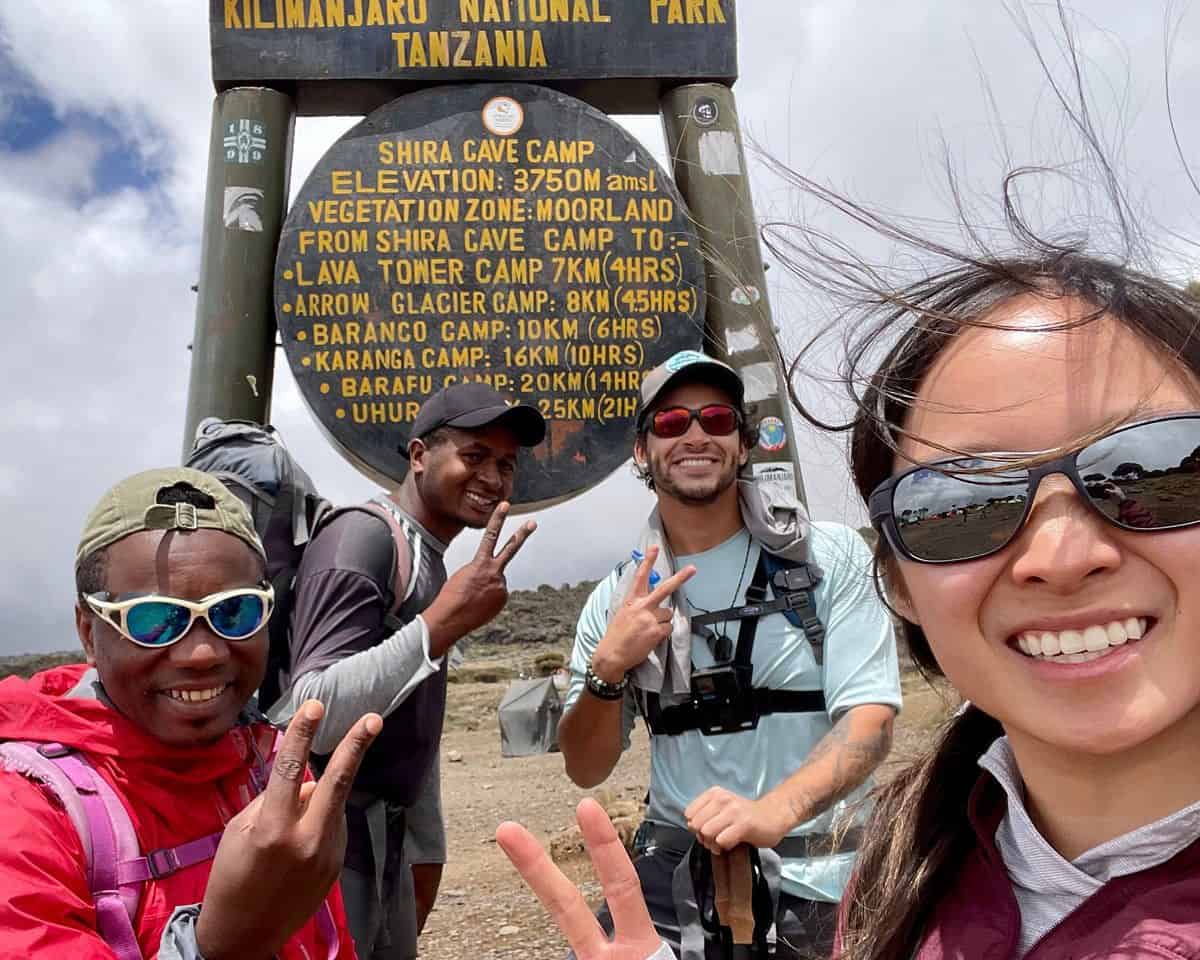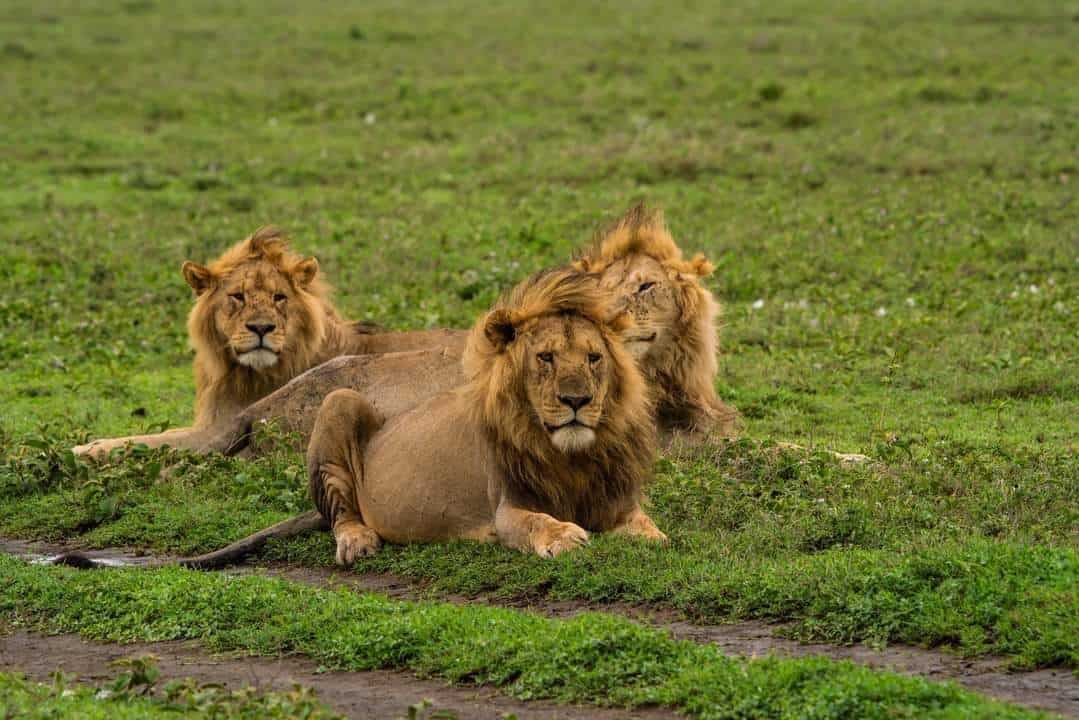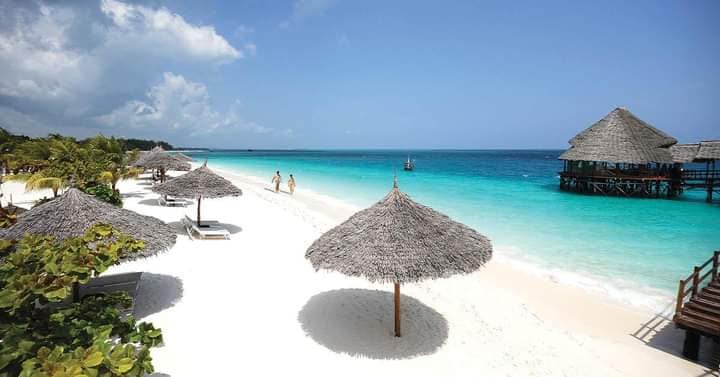

With its trademark abundant wildlife, magnificent scenery, and welcoming people, together with bush and beach options, Tanzania offers a classic wildlife safari Tanzania experience. On the popular northern circuit, see the annual wildebeest migration in the Serengeti. The southern circuit parks, such as Selous and Ruaha, are less-visited gems, while in the west, Gombe and Mahale Mountains offer chimpanzee trekking.

Whether you’re planning Tanzania safari trips, a Tanzania family safari, or a photographic safari in Tanzania, there’s something for everyone to enjoy. Explore Tanzania Safari Tour Packages and featured Tanzania safari tours, to find your next big adventure!

Explore Safari Deals’ featured safari tours to find your next big adventure!

Tanzania Safari Tour Packages:

Tarangire National Park Day Trip

Great Image Expedition
(0 reviews)

On this Tarangire National Park day trip spend the day in one of Tanzania's prime national parks. Nestled in the Manyara Region, Tarangire National Park is often overshadowed by its more famous neighbors, Lake Manyara and Ngorongoro Crater. However, this...

  • Country:
    Tanzania,
  • Safari Type:
    Guided Safari, Wildlife Safari
  • Tour Type:
    Guided, Small Group
  • Start/end:
    Start in Arusha, end in Arusha
  • Price Tag
    1 Days from
    $299 p/p in USD
  • departures icon
    Departures: Year Round

6 Days Kenya Safari

Premier Safaris
(0 reviews)

This 6 Days Kenya Safari is designed to give you a magical Kenya experience. Discover Kenya's breathtaking beauty and diversity, from stunning landscapes and vibrant cultures to incredible wildlife, rich artistic heritage, and pleasant weather all year...

  • Country:
    Kenya,
  • Safari Type:
    Big Five Safari, Guided Safari, Wildlife Safari
  • Tour Type:
    Guided
  • Safari Standard:
    Mid Range
  • Start/end:
    Start/end in Jomo Kenyatta International Airport
  • Price Tag
    6 Days from
    $2200 p/p in USD
  • departures icon
    Departures: Year Round

7 Days Kilimanjaro Climb Machame Route

Kilimanjaro Heroes Adventures
(0 reviews)

Machame Route has a nickname the 'Whiskey Route', and despite the fact that it's relatively short, it is not easy to climb. It is not technically difficult, but it is pretty strenuous, with many steep trails that require extra strength and physical condition...

  • Country:
    Tanzania,
  • Safari Type:
    Mountain Safari, Trekking Safari
  • Tour Type:
    Guided
  • Safari Standard:
    Camping
  • Start/end:
    Start in Moshi, end in Moshi
  • Price Tag
    7 Days from
    $2550 p/p in USD
  • departures icon
    Departures: Year Round

Nestled in a stunning landscape of plains, rolling hills, and forests, Lewa Conservancy offers an authentic blend of pastoral charm and premier wildlife experiences. Once a cattle ranch, Lewa has transformed into one of Kenya’s most celebrated wildlife...

  • Country:
    Kenya,
  • Safari Type:
    Big Five Safari, Guided Safari, Photo Safari, Tailormade Safari, Wildlife Safari
  • Tour Type:
    Guided
  • Safari Standard:
    Luxury
  • Start/end:
    Start in Nairobi, end in Nairobi
  • Price Tag
    3 Days from
    $2120 p/p in USD
  • departures icon
    Departures: Year Round

3 Days Masai Mara Safari

Sublime Travel
(0 reviews)

One of Africa's most famous safari destinations, Maasai Mara is renowned for its vast savannahs teeming with wildlife, including the Big Five (lion, elephant, buffalo, leopard, and rhinoceros). Witness the spectacular Great Wildebeest Migration, where...

  • Country:
    Kenya,
  • Safari Type:
    Big Five Safari, Guided Safari, Wildlife Safari
  • Tour Type:
    Guided
  • Safari Standard:
    Luxury
  • Start/end:
    Start in Nairobi, end in Nairobi
  • Price Tag
    3 Days from
    $1892 p/p in USD
  • departures icon
    Departures: Year Round

Tanzania is renowned for its wilderness areas, including the Serengeti National Park, a top Tanzania wildlife safari destination where visitors can encounter the “big five” animals (elephant, lion, leopard, buffalo, and rhino), and the Kilimanjaro National Park, home to Africa’s highest mountain.

For those planning Tanzania safari trips or a Tanzania family safari, the region offers incredible opportunities for adventure and connection with nature. For a different experience, the tropical islands of Zanzibar and Mafia Marine Park provide chances to explore coral reefs and swim with whale sharks, making them ideal for a Tanzania photographic safari.

Read more

Major Tanzania Safari Attractions

Tanzania Safari Tour Highlights

  • See the epic annual wildebeest migration in the Serengeti as herds move in search of greener pastures.
  • Keep your eyes peeled for unique tree-climbing lions in Lake Manyara National Park.
  • Experience the thrill of chimpanzee tracking in Gombe National Park or the Mahale Mountains.
  • For a bush/beach combo, head to the spice island of Zanzibar for sandy beaches and fascinating history.

Facts About Tanzania Safari Tour

  • Tanzania is an amalgam of Tanganyika and Zanzibar, which merged in 1964 to form Tanzania.
  • At 5,895 meters, Mount Kilimanjaro is the highest mountain in Africa and the highest free-standing mountain in the world.
  • The Ngorongoro Crater is the world’s largest intact caldera and where the Maasai tribe coexist with the wildlife.
  • Olduvai Gorge, a significant paleoanthropological site, is where the world’s earliest human skull was discovered.

Uncover more such interesting facts about Tanzania with our in-depth Tanzania travel guide.

Find your next big adventure by exploring Safari Deals‘s curated and exclusively featured safari tours.

FAQ’s for Tanzania Safari

  • For wildlife safaris the best time to travel to Tanzania is from July to October. This is the dry season when viewing opportunities are better due to vegetation dwindling making the bush less dense while animals congregate around water holes to drink. Keep in mind that this is the peak season and Tanzania attracts a lot of visitors from all over the world so it can be busy plus it’s a more expensive time of year. On the other hand, the shoulder season, November to March is a great time to travel too. Although the bush is thicker so it’s harder to see wildlife, this time of year has less visitors and can be more affordable  For more information about the best time to travel to Tanzania, including its’s coastline, check out our Best Time to Visit Tanzania guide.

  • The great wildebeest migration in Tanzania and Kenya is the largest annual migration of around 1.5 million wildebeest and thousands of zebras, antelopes, gazelle, impala and eland. The migration is a result of dwindling grazing making the animals move to greener pastures following the rainfall pattern. This large-scale migration is fraught with dangerous river crossings where predators are lying in wait. The migration continues year round as the animals travel in a circular route from Tanzania to Kenya and back again. The rains in April and May get the herds of wildebeest on the move in the Serengeti on their journey towards the Masai Mara, Kenya. Once they have reached Kenya, they graze in the Mara. In a few months, the vegetation is exhausted and the animals start their journey back to the Serengeti, and the cycle repeats.

    Check out our Great Migration Timeline to see how the wildebeest migration progresses over the months.

  • From the postcard-perfect beaches and large open skies to the majestic animals and spectacular wilderness, Tanzania offers children mesmerising sights and wildlife adventures. Tanzania is a family-friendly safari destination, but before you hop on to the plane, you’ll need to do some research.

    There are some safari lodges and camps that have age restrictions for children. When you book a safari tour, discuss this with your tour operator and find out details about the restrictions; it might be a lodge or camp which only accepts children over a certain age, or it could be some of the activities where there are age restrictions such as walking safaris or game drives. Some camps offer children-specific activities for families. In terms of safety, it is quite safe to take your kids on a safari, just ensure that they listen to the guide at all times.

  • Even though Swahili, a Bantu language, is the official language of Tanzania and majority of the population speak it, not everyone in Tanzania speaks it. They might speak a variation of the Bantu languages as there are quite a few Bantu and Nilotic languages spoken throughout Tanzania. English is the second official language, spoken by a large number of Tanzanians – a remnant of colonial rule (formerly known as the Tanganyika territory).

  • Although Tanzania’s official currency is Tanzanian Shilling, which is accepted throughout the country, US Dollars are also widely accepted in a majority of tourist areas. However, the locals don’t usually accept US dollar notes printed before 2009. We recommend visitors exchange money at authorised dealers in Tanzania plus there are options to use ATMs to get the local currency. Most of the Tanzanian outlets accept Mastercard and Visa.

    To make things a little simpler, we have shared a quick currency conversions (2021):

    CurrencyTanzanian Shillings
    1 Pound Sterling3212.97
    1 Euro2911.17
    1 United States Dollar2319.26
    1 Canadian Dollar1826.27
    1 Australian Dollar1800.13
    1 Japanese Yen22.10
  • The majority of visitors travelling to Tanzania require a visa to enter Tanzania. There are certain exceptions to that rule. Visitors can either obtain a visa on arrival or get a visa prior to travel from the Tanzania Consulate in their country of residence. Some visitors (from specific countries) may not require a Tanzanian visa at all. Refer to Tanzania Immigration website for the complete list of visa-exempt countries. You can also refer to the same page for Referral Visa Cases, as it provides a list of countries that can acquire a visa on arrival. There are numerous types of visa, but visitors who want to travel to Tanzania for leisure require a Single Entry or an ordinary Visa. In addition make sure your passport has at least six months validity.

  • It’s unlikely that you will have to worry about transport once you arrive in Tanzania. Many safari packages include a vehicle with a driver guide who will can take you around Tanzania on your safari. The vehicle included in the package will be your primary mode of transportation together with any charter or scheduled flights to take you to remote game areas or off shore islands such as Zanzibar.

  • Arusha National Park: The park has more than 400 bird species, the most well-known amongst them the pink flamingoes that can be seen in the shallow waters of the Momela Lakes in Arusha National Park.
    Lake Victoria: Home to more than 200 diverse bird species: cormorant, goliath, great-white egret, sacred ibis and malachite kingfishers are some of the most frequently spotted species.
    Lake Natron: Boasting a diverse population of 127 bird species including ostrich, helmeted guinea fowl, coqui francolin, flamingoes, buff-crested and kori bustards, red-chested cuckoo and white-backed vulture. As well as Lake Victoria and Lake Natron, other lake destinations which are great birding locations include; Lake Eyasi, Lake Manyara-, and Lake Tanganyika are also ideal birding locations are Lake Eyasi, Lake Manyara and Lake Tanganyika.
    Mt. Kilimanjaro National Park: With the highest number of bird species around 750, its diverse habitats are home to numerous turaco species, four of which are Hartlaub’s turaco, rose turaco, Schalow’s turaco and violent-crested Turaco. There are also more than 30 species of cuckoo in the park, including klass cuckoo and emerald cuckoo.
    Ngorongoro Crater: Home to 500 bird species we mention some of the common bird species found in this area in FAQ 18.
    Ruaha National Park: One of Ruaha National Park’s attractions is its large concentration of bird species, 450 bird species, including night-heron, storks, kingfisher, glossy ibis and goliath.
    Rubondo Island National Park: The park has around 300 bird species, which include egrets, herons, flamingoes, kingfishers, spoonbills, African fish eagles and vultures.
    Serengeti National Park: More than 500 bird species call Serengeti National Park  home. Some of them are grey-crested helmet shrike, grey-backed fiscal, Schalow’s turaco, Rupell’s vulture, Verreaux’s eagle and silverbird.
    Usambara Mountains: Usambara Mountains region is teeming with birds including little yellow flycatcher, east coast akalat, dapple-throat arcanator, southern banded snake-eagle and Fischer’s turaco.

    • Arusha Game Reserve
    • Lake Manyara National Park
    • Lake Victoria
    • Mount Kilimanjaro
    • Ngorongoro Conservation Area
    • Ruaha National Park
    • Selous Game Reserve
    • Serengeti National Park
    • Tarangire National Park
    • Zanzibar Beaches and Historical Sites

Read more: Frequently Asked Questions on Tanzania